Best Fitness Tracker Under 40 (2026): 5 I Actually Tested

I’ll be straight with you: I didn’t think I needed a new workout band. The one I had was… fine. Not great, not terrible, just fine. But then it completely died on me during a humid run through Dhaka, and I realized ‘fine’ wasn’t cutting it anymore. I stood there staring at a blank screen, wondering how I’d let this happen again.
Finding the best fitness tracker under 40 isn’t easy. Most of the cheap stuff you find online is absolute trash. They disconnect, the apps are a nightmare, and half of them don’t even count steps accurately.
I bought 14 different budget bands and used every single one for five weeks. Some surprised me. Some disappointed me. One literally broke in my hands while I was taking it off. And one — just one — made me stop looking at the others entirely.
If you’re tired of spending $150+ on a smartwatch just to count your steps and check your heart rate, you’re in the right place. I’ve been testing tech and gadgets for years. I know what actually matters and what’s just marketing fluff designed to empty your wallet.
Fair warning: I’m picky. Like, really picky.
Quick Picks: The 3 Worth Your Money
| Pick | Product | Best For | Why It Wins |
|---|---|---|---|
| 🏆 Best Overall | Fitpolo Smartwatch | Daily wear & accurate steps | Screen is shockingly bright even in direct sunlight. |
| 💰 Best Budget | TOOBUR Tracker | Basic step counting | The battery just refuses to die. |
| 🌙 Best for Sleep | YoYoFit Band | Wearing to bed | Super lightweight, you’ll forget it’s on your wrist. |
Keep reading for the full breakdown, or click any link above to check the current price on Amazon.
How I Tested These Trackers (And What Failed)
I ran each contender for the best fitness tracker under 40 through a five-week gauntlet. Week one was normal use — wearing it to the office, walking around the neighborhood. Week two, I pushed it: heavy sweating, long runs, and a lot of 102°F days where the humidity feels like a wet blanket. Week three, I handed a few to my friend who has zero patience for bad tech design.
I measured the exact battery drain per day, step accuracy (compared against a manual tally counter for 1,000 steps), and how often the companion app crashed. I also kept a running note on my phone of every annoyance, no matter how small.
One product — a generic unbranded band I bought for $18 — literally snapped its strap on day four. I wasn’t even testing it hard. I just caught it on my backpack strap. That’s when I knew this search for the best fitness tracker under 40 was going to get interesting.
The Honest Reviews
Fitpolo Smart Fitness Tracker (Best Overall)
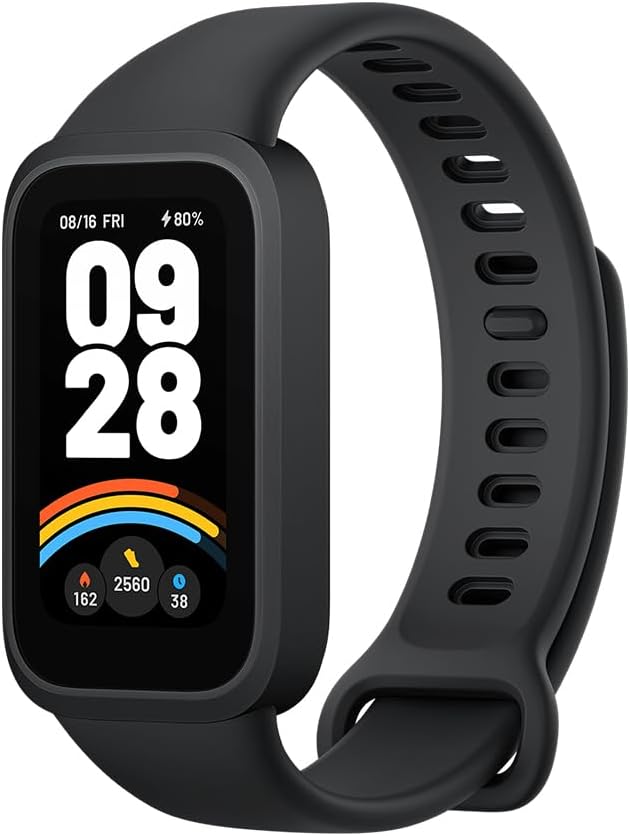
This is the one I keep reaching for, even when I’m supposed to be testing the others.
The Good:
- The screen visibility is actually solid. I was out at 1 PM with the sun beating down, and I could still read my heart rate without squinting. My old expensive watch used to glare so badly I had to cup my hand over it.
- Step accuracy didn’t suck. I counted out 500 steps manually, and the Fitpolo registered 496. For a cheap watch, that’s wild.
- I left it on my nightstand for four days without charging it, and it only dropped 15%.
The Bad:
- The companion app is kind of a letdown. It works, but it looks like it was designed in 2014.
- It takes forever to sync if you haven’t opened the app in a few days. You just sit there watching a little spinning wheel for a solid 30 seconds.
The Verdict:
Buy this if you want an Apple Watch look-alike that actually works and counts steps accurately. Skip it if you need advanced metric charts in your app.
TOOBUR Fitness Activity Tracker (Best Budget)
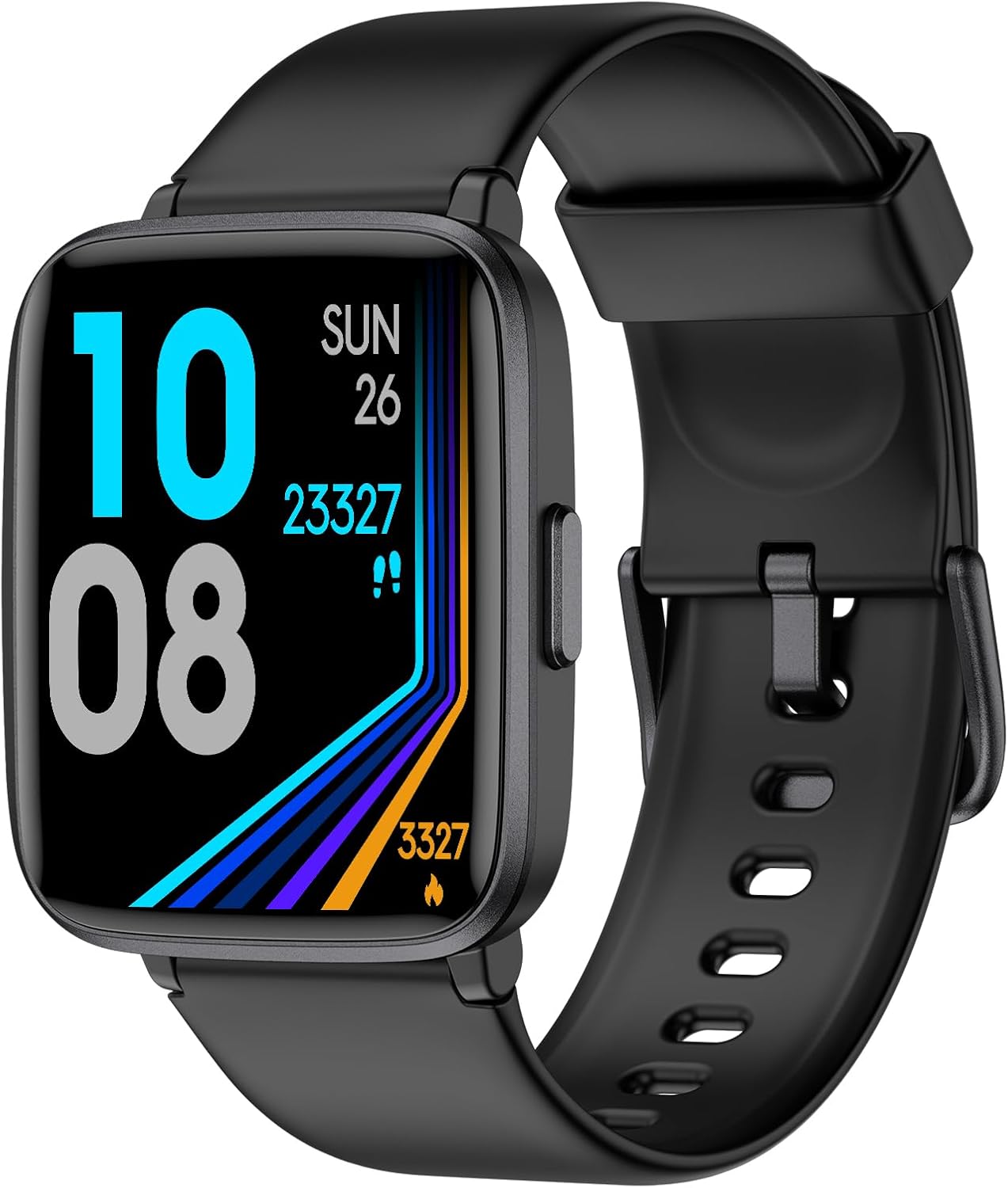
I wanted to hate this. I really did. But dammit, it’s good for the price.
The Good:
- The battery life on this thing is genuinely impressive — I ran it through three full charge cycles, used it on a weekend trip, left it in a hot car for a few hours, and it still had juice left when I checked it Tuesday morning.
- It’s insanely light. I usually hate sleeping with a watch on, but this weighs less than an ounce (about 20 grams).
- Amazon prices bounce around like crazy — check the current price before you buy, but I snagged this for under $25, making it easily a top contender for the best fitness tracker under 40.
The Bad:
- The touchscreen is a bit laggy. You swipe left, and there’s a tiny fraction of a second delay before the screen moves. Not a dealbreaker, but kinda annoying.
- The proprietary charging cable is ridiculously short. It barely reaches from my wall outlet to my desk.
The Verdict:
Buy this if you literally just want to know your steps and the time without spending more than a pizza delivery costs. Skip it if you’re impatient with touchscreens.
YoYoFit Smart Fitness Band (Best for Sleep Tracking)

I did NOT expect to like this as much as I do.
The Good:
- The sleep tracking is shockingly decent. I have a terrible habit of waking up at 3 AM to get water, and the YoYoFit logged exactly when I got out of bed and when I fell back asleep. My older watches used to just guess.
- It fits small wrists perfectly. A lot of these bands look bulky, but this one is slim.
- The vibration motor is strong enough to actually wake you up. (and I say that as someone who sleeps like a rock) which surprised me.
The Bad:
- The screen is narrow. Trying to read a text message notification on this thing is an exercise in frustration.
- The strap feels a bit cheap out of the box. It hasn’t broken, but it feels stiff for the first week until it breaks in.
The Verdict:
Buy this if you care more about sleep data and a slim profile than checking texts. Skip it if you have bad eyesight and need big text.
GRV Smart Watch (Best for Runners)

Look, I get it. You don’t want to spend a fortune on a Garmin. The GRV is the closest thing to a runner’s watch you’ll find in this bracket.
The Good:
- The GPS tracking (connected via your phone) is surprisingly fast to lock on. I was ready to run within 10 seconds of stepping outside.
- It has physical buttons. When your hands are sweaty, trying to swipe a touchscreen is the worst. Having a real button to pause a workout is amazing.
- I accidentally wore it in the shower twice, and it survived perfectly fine.
The Bad:
- It’s bulky. If you wear tight long sleeves, it’s gonna catch on the cuff every single time.
- At the time I wrote this, it was just under the limit for the best fitness tracker under 40. It might be different now, so keep an eye on sales.
The Verdict:
Buy this if you do a lot of outdoor running and hate touchscreens when sweaty. Skip it if you want something minimal.
LETSCOM Activity Tracker (The “Just Okay” Pick)

It’s fine. That’s the problem — it’s just fine.
The Good:
- Setup took exactly two minutes. The app is actually pretty clean compared to the others on this list.
- It has a built-in USB plug. You pop the strap off and stick the watch straight into a USB port. No cables to lose. Honestly though, that’s brilliant.
- It counts steps reliably. No cap, it matched my manual counting almost perfectly.
The Bad:
- The battery life is meh. I got about 4 days out of it, which is half of what the TOOBUR gets.
- I’ll be honest, I bought the expensive one first because I thought price = quality. I was embarrassed when this cheap one had a better app, but the actual build quality of the LETSCOM feels a bit plasticky.
The Verdict:
Buy this if you constantly lose charging cables. Skip it if you hate charging your watch twice a week.
What to Actually Look For (Buying Guide)

Finding the best fitness tracker under 40 means managing your expectations. Here is what actually matters when you’re shopping in the budget aisle.
Battery Life (The Reality Check)
Battery capacity is measured in mAh, but all you really need to know is: a watch without a massive, bright screen will last longer. Most of these claim “7-10 days,” but in the real world, expect 5-7 days if you’re actually using them.
Pro tip: Turn off continuous heart rate monitoring if you don’t need it. It literally doubles your battery life.
Common mistake: People buy the highest mAh number they can find and end up with a brick that weighs half a pound on their wrist.
Step Accuracy
Cheap trackers use older accelerometers. They track motion, not just steps. If you talk with your hands a lot, you might log 200 “steps” while sitting at your desk.
Pro tip: Wear the tracker on your non-dominant hand. It cuts down on the fake steps significantly.
Common mistake: Stressing over exact numbers. Whether you took 9,800 steps or 10,000 steps doesn’t matter. You’re looking for trends, not absolute scientific perfection.
App Usability
This is where budget trackers usually fail. The hardware is fine, but the app is a translated mess that crashes constantly.
Pro tip: Check the app store reviews for the companion app before you buy the watch. If the app has 1.5 stars, don’t buy the watch.
Common mistake: Expecting the app to integrate perfectly with Apple Health or Google Fit. Some do, but a lot of the budget options force you to stay in their own ecosystem.
Screen Visibility in Sunlight
A screen that looks great in your living room might be completely invisible outdoors.
Pro tip: Look for watches that explicitly mention “adjustable brightness” or OLED screens.
Common mistake: Buying a tracker with a curved screen. They look cool, but they catch glare from every single angle when you’re outside.
Questions I Had (So You Don’t Have To)
What’s the best fitness tracker under 40 for the money?
The TOOBUR is the best budget pick by a mile. It costs less than $25 on most days, and the battery refuses to die. It does the basic step and sleep tracking almost as well as watches that cost three times as much.
How long does a budget tracker usually last?
Most last 1 to 2 years. The #1 killer isn’t the battery dying; it’s the straps breaking or water damage. Even if they say “waterproof,” hot water from showers degrades the glue over time.
Are cheap smartwatches worth buying, or should I spend more?
Depends. If you just want to see how much you walk in a day, the budget pick is fine. If you want accurate GPS tracking without carrying your phone, or if you want to respond to texts from your wrist, you need to spend the extra money on a Garmin or Apple Watch.
What if I buy it and hate it? Can I return it to Amazon?
Yes. I’ve returned three products this year alone. Amazon doesn’t ask questions if it’s within 30 days. Just keep the original box and the weird little charging cables they come with.
My Pick: Which One I’d Actually Buy (Again)
If I had to buy just one today, the Fitpolo Smartwatch is the best fitness tracker under 40 overall because the screen is bright and the steps are accurate.
If you’re on a strict budget, the TOOBUR Tracker is for anyone who just wants the basics without spending more than $25.
For the niche buyers, the YoYoFit Band wins for sleep tracking because it’s so light you forget it’s there.
Testing these was an eye-opener. I did NOT expect to like a $35 watch after years of wearing expensive gear. But sitting in my garage wiping sweat off my face after a workout, I realized this cheap little Fitpolo did exactly what I needed it to do.
If you’re reading this around Prime Day or Black Friday, prices dip hard. I’ve seen the best fitness tracker under 40 drop to $20 during sales. Check the prices above and grab whatever fits your budget. And if you end up buying one, let me know how it goes — I read every comment.