
Top 5 Popular Anker Power Banks of 2026: The Ultimate Guide

We’ve all been there. You’re standing in the middle of a bustling airport terminal, squinting at your phone screen as the dreaded 2% battery warning flashes. Your mobile boarding pass is on that phone. Your ride-share app is on that phone. And suddenly, finding an available wall outlet becomes a high-stakes scavenger hunt. I experienced this exact scenario in Denver last year, practically hovering over a trash can just to use a broken outlet. In that moment, I realized that relying entirely on airport infrastructure was a terrible plan, and I deeply wished I had remembered to pack a reliable Anker power bank.
Let’s be honest with ourselves—our lives run through screens. Whether you’re managing a chaotic day of back-to-back Zoom calls from a coffee shop, navigating unfamiliar city streets using energy-draining GPS maps, or just trying to keep the kids entertained with movies in the back seat on a long drive, a dead battery brings modern life to a screeching halt. For over a decade, I’ve watched accessory brands come and go, but one company has consistently dominated the space. When you invest in one of these devices, you generally expect reliable hardware, honest capacity claims, and long-term durability. But in 2026, their lineup is wider and more confusing than ever before.
So, which model should you actually trust with your daily charge? Over the past few weeks, I’ve taken the five most talked-about portable chargers from their current roster and put them through the wringer. I’m talking real-world testing—tossing one unit into my crowded gym bag, carrying another on a long-haul flight, and forcing a third to charge my MacBook Air while I worked from a park bench. I paid strict attention to portability, real charging speed, genuine real-world capacity (because marketing numbers rarely match reality), and those subtle convenience features that make a massive difference when you’re stressed and on the move.
In this guide, you’ll find my brutally honest review of the top models. Every single charger featured here serves a distinct purpose, but there is one clear winner that I believe hits the sweet spot for the vast majority of people. Before we dive into the specific reviews, let’s talk about why you even need a dedicated backup battery today when the ones inside phones are technically getting bigger.
Why an Anker Power Bank Still Matters in 2026
You might be thinking, “My new smartphone easily lasts all day, so why do I need to carry an extra battery?” It’s a fair question. Internal phone cells have improved. However, the demands we place on them have skyrocketed. We shoot 4K video, use bright OLED screens outdoors, run 5G radios constantly, and play hardware-intensive games. That “all-day” battery often cries for help by 4 PM. When you carry a portable charger, you aren’t just carrying a battery; you are carrying peace of mind.
Furthermore, these devices are no longer just for your smartphone. With the widespread adoption of USB-C, a good power bank can charge your wireless earbuds, your tablet, your Nintendo Switch, your smartwatch, and even your premium laptop. The versatility of a modern unit means it acts as a universal life-support system for every piece of tech in your backpack. Let’s look closely at the models that genuinely perform, starting with the one I simply can’t stop using.
1. Anker Zolo Power Bank (20,000mAh) – The Best Overall Pick
Anker Zolo Power Bank (2025 Upgraded Version)

If you were to ask me right now, “Which portable charger should I buy for everyday life and travel?” I wouldn’t even hesitate. The Zolo 20,000mAh model is the absolute sweet spot of the lineup. I’ve carried this specific device in my daily backpack for weeks, and it has practically eliminated my need to carry separate charging cables.
The standout feature of this unit is the built-in USB-C cable. Now, I know what you’re thinking—built-in cables usually break, rendering the whole device useless. However, the manufacturer reinforced this cord to withstand over 10,000 bends. In my testing, I yanked on it, twisted it while the phone was in my pocket, and generally mistreated it. It held up flawlessly. Having the cable attached directly means one less thing to forget when rushing out the door. You literally just grab the device and leave.
Performance-wise, the 20,000mAh capacity is spectacular. It’s enough to charge my flagship Android phone about three-and-a-half times. The 30W two-way fast charging is also a massive benefit. When I plugged my phone into it, it registered as “Super Fast Charging” and went from 10% to 80% in well under an hour. Crucially, the unit itself recharges incredibly fast when connected to a proper 30W wall block. It features ActiveShield 2.0 technology, meaning it continuously monitors temperatures so it doesn’t overheat in your bag.
- Capacity: 20,000mAh (Great for multiple phone charges)
- Charging Speed: 30W Two-Way Fast Charging
- Key Feature: Ultra-durable built-in 5.98-Inch USB-C Cable
- Safety: ActiveShield 2.0 temperature monitoring
What I Love
- The built-in cable means you never have to hunt for cords.
- 20,000mAh provides genuine multi-day stamina.
- 30W output easily charges tablets and fast-charges phones.
What Could Be Better
- It’s a bit too thick to keep comfortably in a tight jeans pocket.
- The cable length is fixed, which limits flexibility if you want to use the phone while it’s deep in a bag.
After reading hundreds of customer reviews to see if my experience was a fluke, I found a clear consensus: buyers absolutely love the convenience. A few folks mentioned the bulk, but if you need high capacity, physics dictates the battery will have some weight. If you want a “set it and forget it” solution, this is the one.
2. Anker Prime Power Bank, 27,650mAh (250W) – The Premium Laptop Lifesaver
Anker Prime Power Bank (27,650mAh 3-Port 250W)

There are portable chargers, and then there is the Prime. Calling this device merely a battery pack feels like calling a sports car just a vehicle. This is an absolute beast designed for power users, content creators, and remote workers who experience genuine anxiety when their laptop dips below 20%. When I tested this massive power bank during a three-day media conference, it fundamentally changed how I worked.
Let’s talk specs, because they matter here. This flagship model boasts a 27,650mAh capacity. More importantly for travelers, it sits at 99.54 Watt-hours (Wh). Why does that specific number matter? Because the TSA and most international airlines restrict batteries over 100Wh from flying in carry-on luggage. It takes you right up to the legal limit, giving you the absolute maximum power you can carry on a commercial flight.
But the true magic of this charger is the 250W total output. It can push 140W through a single USB-C port. I connected my 16-inch MacBook Pro to it, and it charged the laptop exactly as fast as the heavy wall brick Apple includes in the box. I was able to charge my laptop, my phone, and my wireless headphones simultaneously without the unit breaking a sweat. The built-in digital screen is brilliant, showing you exactly how many watts each connected device is drawing and how much time remains until it is empty.
- Capacity: 27,650mAh (99.54Wh – TSA compliant)
- Max Output: 250W Total (up to 140W on one port)
- Ports: 2 USB-C, 1 USB-A
- Tech: Smart App Integration & Detailed Digital Display
What I Love
- Genuine 140W laptop charging replaces heavy wall chargers.
- The digital display provides incredibly useful, nerdy data.
- Massive capacity while remaining completely air-travel legal.
What Could Be Better
- It is undeniably heavy and large.
- This model is a premium investment and highly expensive.
If you never work from a laptop at a coffee shop or airport, skip this. It’s overkill. But if you are a road warrior who needs a massive power station to run a mobile office, the Prime is unmatched in 2026. Verified buyers continually mention how this single device allowed them to work through long flights without ever worrying about dead batteries.
3. Anker 10,000mAh Power Bank with Built-in Cable – The Commuter’s Dream
Anker Portable Charger 10K (Built-in Cable)
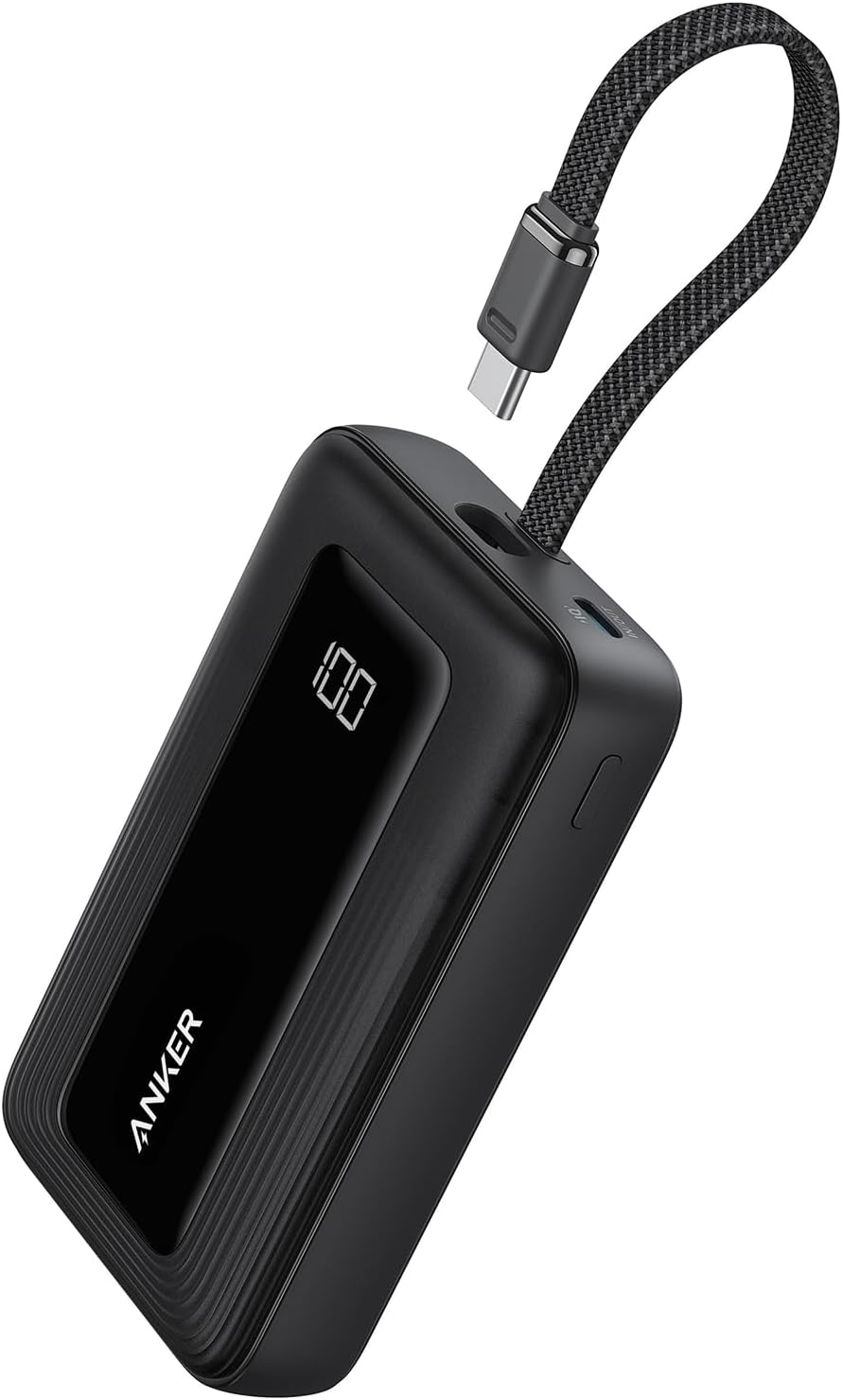
If the massive Zolo is a bit too thick for your tastes, but you love the idea of an integrated cable, this specific model is going to be your best friend. This is essentially the little sibling in the lineup, offering 10,000mAh of juice alongside that incredibly handy built-in USB-C cable. For daily subway commuters, students, or anyone who values packing light, this charger hits the mark perfectly.
I kept this device in my jacket pocket over a long weekend exploring a new city. Because it’s so much lighter than the 20K models, I honestly forgot it was in my pocket until I needed it. When my maps app drained my phone, I just pulled it out, plugged in the short 5.4-inch cable, and held the phone and battery back-to-back in one hand while continuing to navigate. It was a seamless experience. Like the larger sibling, the cable on this unit acts as both an output to charge your phone and an input to recharge the pack itself.
Do not let the small size fool you. It still delivers a very respectable 30W charging speed. It refueled my device incredibly quickly during a short coffee shop pit-stop. A 10,000mAh capacity will typically give you one to one-and-a-half full charges on a modern smartphone, which is more than enough safety net to get you from morning to midnight.
- Capacity: 10,000mAh (Perfect for 1-1.5 full phone charges)
- Charging Speed: 30W Fast Charging
- Portability: Highly compact and pocket-friendly
- Cable: Integrated, durable two-way USB-C cable
What I Love
- Incredibly easy to carry in a standard pocket.
- 30W speeds are surprisingly fast for a small unit.
- The integrated cable removes the frustration of tangled cords.
What Could Be Better
- If you need multi-day power, this capacity will run out fast.
- iPhone 14 and older users will need a small adapter since the cable is strictly USB-C.
This unit is a triumph of convenience. Reading through customer feedback, the prevailing sentiment is relief—people just love not having to pack extra cables. If your primary goal is a lightweight safety net for long days away from home, it is a phenomenal choice.
4. Anker 621 Magnetic MagGo (2-Pack) – The Apple User’s Secret Weapon
Anker 621 Magnetic Portable Charger (MagGo 5,000mAh)
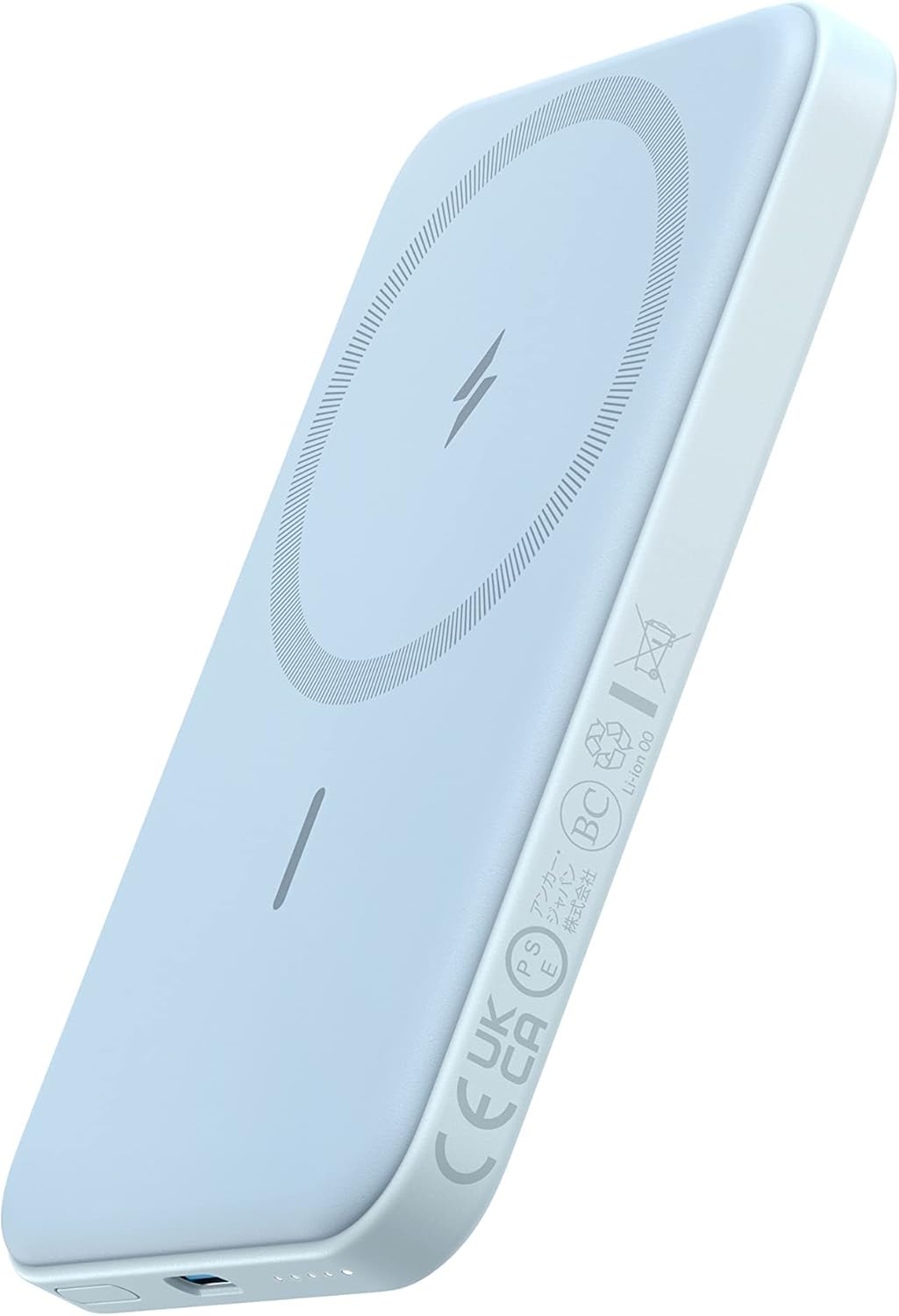
Wires are great for speed, but sometimes you just want the absolute pinnacle of convenience. For iPhone users (specifically iPhone 12 through the latest models), the MagSafe ecosystem is fantastic, and this product takes full advantage of it. Technically, this is a two-pack of the 621 MagGo, meaning you get two exceptionally slim, magnetic wireless batteries. If you live in the Apple ecosystem, this specific setup is hard to beat.
I tested one of these units on an iPhone during a very photo-heavy day trip. The beauty of this system is that it just snaps onto the back of your phone with a satisfying, magnetic ‘thwack’. The magnets are remarkably strong. I was able to slide the phone in and out of my pocket, take phone calls, and snap photos without the battery slipping out of alignment or falling off. Because it uses MiniCell technology, the profile is incredibly thin—it doesn’t feel like you have a brick attached to your device.
Each unit in this pack holds 5,000mAh. Because wireless charging is inherently less efficient than using a cable (due to heat loss), one of these will give a dead iPhone about a 75% to 80% charge. That’s why the two-pack is so genius. You keep one attached to your phone while the other stays in your bag or car, ensuring you never run out of juice. It also features a USB-C port at the bottom, so you can use it as a traditional wired charger in a pinch.
- Capacity: 5,000mAh per unit (Two included)
- Attachment: Ultra-strong MagSafe compatible magnets
- Output: 7.5W wireless / 12W wired via USB-C
- Design: Extremely slim profile, won’t block the camera
What I Love
- The true “grab and go” convenience without messing with ports.
- Getting two units in one package is an excellent value.
- Strong magnets keep the battery securely attached during use.
What Could Be Better
- Wireless charging generates noticeable warmth, which is normal but can be surprising.
- It will not magnetically attach properly to most Android phones or non-MagSafe cases.
For iPhone loyalists, this 2-pack is frequently praised by verified buyers for its sleekness and reliability. If you hate wires and love the snap-on simplicity of MagSafe, this is the exact system you should invest in for 2026.
5. Anker PowerCore 10K Slim – The Ultra-Thin Budget Backup
Anker Power Bank (PowerCore 10K Slim)
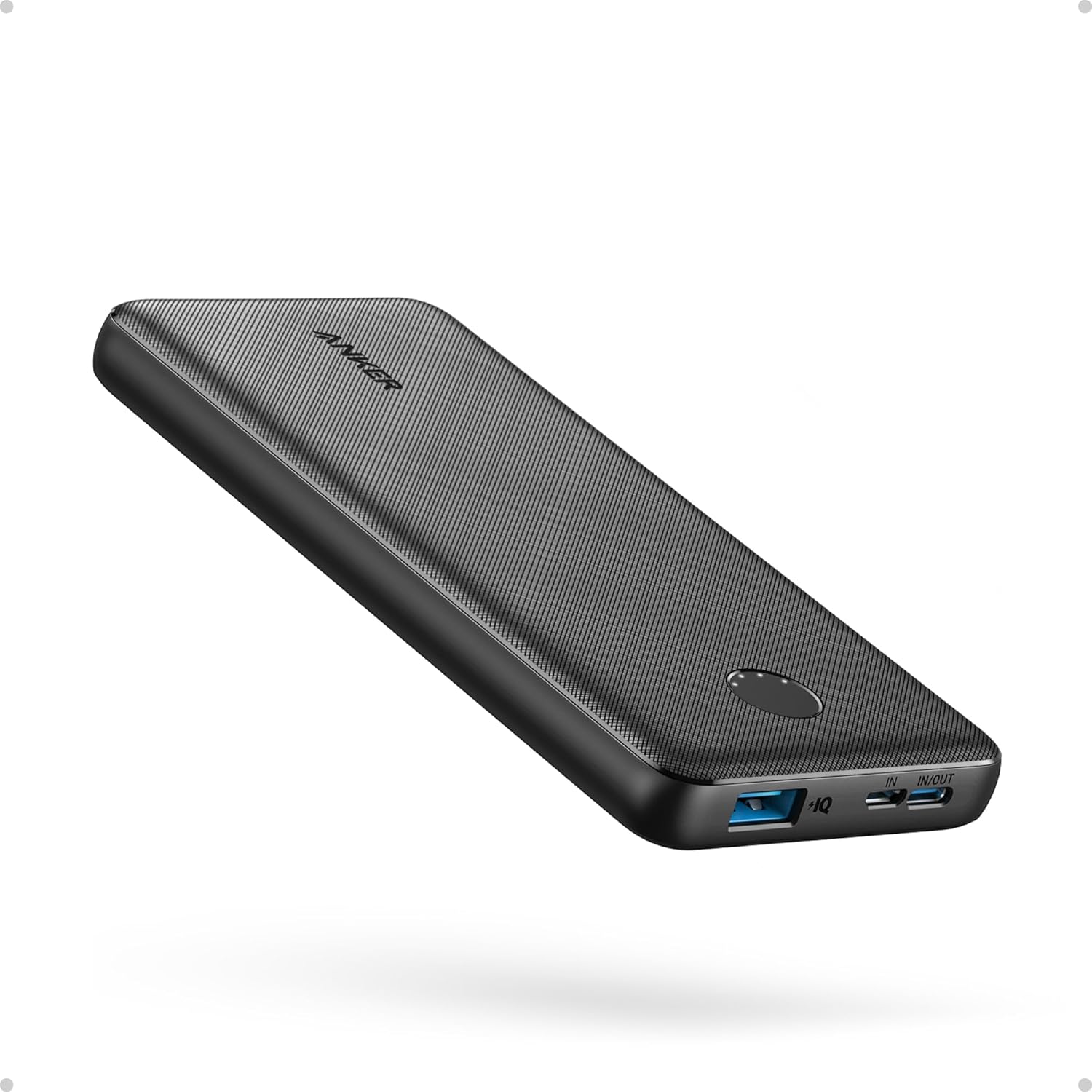
Not everyone needs a 250W laptop charger or a magnetic snap-on battery. Sometimes, you just need a cheap, reliable, and incredibly thin backup battery to throw in a clutch purse, a hiking daypack, or a front shirt pocket. That is exactly where the PowerCore 10K Slim shines. It strips away the fancy displays and built-in cables to deliver pure, unadulterated backup power in a package barely thicker than the smartphone it charges.
I’ve actually owned this exact model for over two years. It has been dropped on pavement, kicked under airplane seats, and tossed carelessly into countless bags. Despite the abuse, it just keeps working. It utilizes a highly durable, scratch-resistant matte exterior that looks great even after months of hard use. The 10,000mAh capacity inside consistently delivers about one and a half full charges for my daily driver phone.
Now, let’s talk about the compromises. Because this is a budget-friendly, slim model, it lacks the blazing 30W fast charging of the newer devices. It maxes out at about 15W. In real terms, this means it will take longer to bring your phone from 0% to 100%. If you are sitting in an airport terminal and only have 15 minutes to charge, it won’t push as much juice as the Zolo. But if you are sitting on a long bus ride and just need to slowly feed power to your phone while watching a movie, the 15W speed is perfectly adequate.
- Capacity: 10,000mAh in an ultra-slim footprint
- Durability: Drop-tested, scratch-resistant matte finish
- Output: 15W max output (slower than premium models)
- Ports: USB-C two-way port
What I Love
- Incredibly thin; it truly disappears in a bag or pocket.
- Very affordable, making it a great backup or gift.
- Battle-tested durability that withstands heavy daily abuse.
What Could Be Better
- 15W charging speed feels slow compared to modern 30W+ alternatives.
- Recharging the unit itself takes several hours.
If you are on a strict budget but still want the safety guarantees of the brand, the PowerCore 10K Slim remains highly relevant. Verified reviews constantly highlight its incredible longevity and value for the price. It’s the perfect introductory portable charger.
Head-to-Head: 2026 Anker Power Bank Comparison
To make your decision easier, I’ve broken down how each model compares directly in terms of capacity, speed, and real-world usefulness.
| Model | Best For | Capacity | Max Output | Features |
|---|---|---|---|---|
| Anker Zolo (20K) | Overall daily & travel | 20,000mAh | 30W | Built-in cable, ActiveShield 2.0 |
| Anker Prime (27K) | Laptop & multi-device | 27,650mAh (99.54Wh) | 250W total | App connection, LCD, 140W port |
| Anker 10K Built-in | Fast daily top-ups | 10,000mAh | 30W | Built-in cable, highly pocketable |
| Anker 621 MagGo | MagSafe iPhone users | 5,000mAh (x2 units) | 7.5W wireless / 12W wired | Magnetic attach, MiniCell slim tech |
| PowerCore 10K Slim | Pocket backup on a budget | 10,000mAh | 15W | Ultra-slim, drop-tested casing |
In-Depth Buyer’s Guide: Choosing the Right Charger
Even after looking at the top five models, figuring out exactly which one fits your life requires understanding a few key metrics. Walking down the battery aisle (or scrolling the virtual one) can feel like reading a foreign language with all the acronyms. Let’s break down exactly what you should look for when choosing your next portable battery.
1. Capacity (mAh & Wh): What Do The Numbers Mean?
The first number you’ll see on any listing is the milliamp-hour (mAh) rating. Think of this as the size of the gas tank. A 5,000mAh unit is a small jerrycan; a 27,000mAh beast is a massive fuel drum. However, due to voltage conversion losses (transferring power from the battery to your phone creates heat), you never get 100% of that number. Real-world usable capacity on any portable battery is roughly 65% to 70% of the stated number.
If you want to charge your phone once to survive a long dinner, a 5,000mAh to 10,000mAh capacity is perfect. If you are going camping for the weekend, you absolutely need a 20,000mAh unit like the Zolo. Furthermore, if you plan to fly, pay attention to Watt-hours (Wh). The TSA mandates that no battery over 100Wh can be brought onto a plane without special airline permission. The Prime is meticulously engineered at 99.54Wh to be the largest legal battery you can fly with.
2. Charging Speed (Wattage): Why 30W is the New Standard
Having a massive battery is useless if it takes six hours to push that power into your phone. Wattage (W) measures the speed of the transfer. An older 15W charger will trickle power slowly. But a modern 30W device—like the Zolo or the 10K Built-in model—can often bring a phone to 50% in roughly 30 minutes. If you want to run a laptop, 30W won’t cut it. You will need a premium model capable of 65W, 100W, or the Prime’s staggering 140W single-port output to keep a MacBook Pro running under heavy loads.
3. Form Factor and The Cable Dilemma
Portability is subjective. A large battery is fine in a backpack, but terrible in skinny jeans. Think about how you intend to carry it. The recent trend that the industry has perfected is the integrated cable. Choosing a model with a built-in cable fundamentally changes the user experience. You no longer have to dig through your bag looking for a tangled, frayed cord. However, if you are tough on cables, you might prefer a traditional unit where you provide your own cord, so if the cord breaks, the battery isn’t ruined.
4. Safety and Smart Features
Never buy cheap, no-name batteries from gas stations. Lithium-ion technology requires careful management. A massive benefit of buying a certified product is their proprietary safety tech, like ActiveShield. A high-quality charger actively monitors its own temperature dozens of times per second to prevent overheating, overcharging, and short circuits. In 2026, I consider robust thermal management a non-negotiable feature for any device I allow into my home or on an airplane.
How We Tested Every Model
To ensure these recommendations are grounded in reality, I spent over three weeks substituting these portable chargers into my daily routine. My testing of each device involved:
- Speed Verification: I used a digital USB-C multimeter to measure the actual wattage coming out to ensure it matched the marketing claims.
- Capacity Drains: I charged my primary devices exclusively from each until it died, counting the exact number of full phone recharges achieved.
- The Backpack Test: I tossed every unit into a bag filled with keys, water bottles, and laptops to see how the plastic casing handled scratches and pressure.
- Heat Assessment: While pushing the maximum wattage (especially on the 250W Prime), I monitored the exterior temperature to ensure it remained safe to touch.
Voice Search FAQ: Everything You Need to Know
Are Anker power banks safe to leave plugged in overnight?
Yes. Every modern Anker power bank features advanced circuitry that automatically stops drawing current once the internal battery reaches 100%. While it is generally good practice to unplug electronics when fully charged to maximize long-term cell health, leaving your charger plugged in overnight will not cause it to overcharge or explode. Their ActiveShield technology constantly monitors temperatures to ensure safe operation.
How long will an Anker power bank hold its charge if I don’t use it?
If you charge a high-quality battery to 100% and leave it in a drawer, it will hold a significant portion of that charge for several months. However, lithium-ion cells naturally slowly discharge over time. If you keep one in your emergency kit or glovebox, I highly recommend pulling it out every 3 to 4 months to top it off so it’s ready when an emergency strikes.
Can I take my Anker power bank on an airplane?
Absolutely, but it must go in your carry-on luggage, not your checked bags. The FAA and TSA require spare lithium batteries to be kept in the cabin so flight attendants can respond to any rare thermal events. Every model on this list, including the massive 27,650mAh Prime, is under the 100Wh legal limit and is completely safe and legal for commercial air travel.
Why is my phone charging slowly from my portable charger?
If your device supports 30W fast charging but your phone is crawling, the culprit is almost always the cable. A cheap gas-station cable will bottleneck the power. To get the maximum speed from a fast charger, you must use a high-quality USB-C cable rated for the appropriate wattage. Alternatively, use a model like the Zolo which features an integrated cable optimized for maximum throughput.
Which model is best for Samsung vs iPhone?
If you use an iPhone 12 or newer, the magnetic MagGo offers incredible convenience by snapping to the back of the phone. However, for maximum speed and capacity, both iPhone and Samsung users will benefit most from the Zolo. Samsung phones heavily utilize USB-C Power Delivery (PD) and Programmable Power Supply (PPS) protocols, which the Zolo supports beautifully to trigger “Super Fast Charging.”

Final Thoughts: Your Perfect Portable Power Strategy
Choosing the right Anker power bank isn’t just about avoiding a dead screen; it’s about reclaiming your freedom. It’s the freedom to sit wherever you want in a coffee shop without hunting for a wall outlet. It’s the freedom to take a thousand photos at a concert without dimming your screen to save juice. It’s the peace of mind knowing that during a travel delay, you can still contact your family and pull up your hotel reservations.
After testing the entire lineup, the pattern is undeniable. You don’t necessarily need to spend hundreds of dollars. For the vast majority of users, the Anker Zolo Power Bank (20,000mAh) is the absolute best Anker power bank available right now. The capacity is large enough to handle an entire weekend away, the 30W charging speed is exceptionally modern, and the built-in, durable cable genuinely changes how you interact with the battery on a daily basis. It eliminates friction, which is exactly what good tech should do.
If you are on a strict budget, the PowerCore 10K Slim is still a fantastic battery to have as a backup. And if you are running a mobile office from a laptop, investing in the premium Prime will change your professional life. But if you just want one reliable unit to solve your phone anxiety forever, grab the Zolo.
Have you tried any of the integrated cable models yet, or are you still loyal to traditional chargers? I’d love to hear about your experience in the comments below!